
The AI-native HRIS that simplifies your HR processes.
A comprehensive HRIS software, designed for every stage of the employee lifecycle
mpleo brings all your HR processes together into a single environment. Activate the modules you need and evolve your HRIS in line with your priorities.
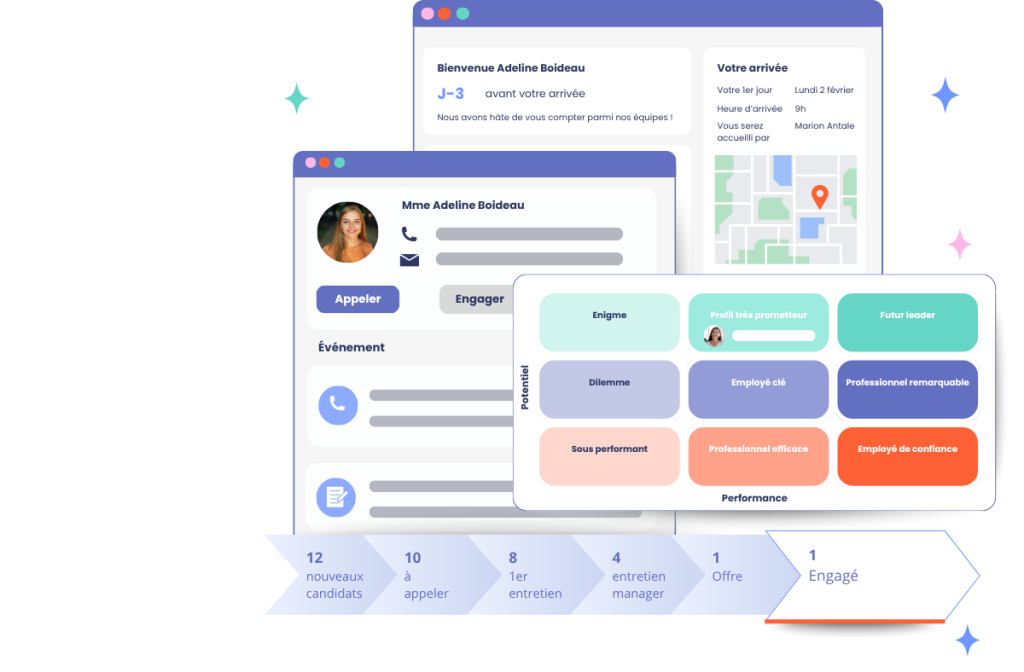
Centralize your applications and track every stage of the recruitment process, never leave a candidate without a response again.
Explore the Recruitment module
Prepare the onboarding of your new hires with structured journeys, automated tasks and reminders, and streamlined document collection.
Explore the Onboarding module
Centralize your employee data within a reliable Core HR, designed to seamlessly power all your HR processes.
Explore the mpleo Core HR
Drive team performance, map skills, and secure your key positions. The goal: align individual career paths with your company’s strategy.
Explore the Skills module
Explore Succession Planning
Launch your review campaigns, configure your templates, collect feedback, and leverage insights from discussions to better support your employees.
Explore the Review management module
Build your training plan, centralize requests, schedule sessions, and track budgets, attendance, evaluations, and certifications.
Explore Training
Explore the E-learning module
Explore the Authorization management module
Track attendance, overtime, timesheets, and variable pay elements. Your data is structured, compliant, and readily usable for HR, managers, and payroll.
Explore Absence Management
Explore Attendance Management
Explore Time Tracking
Explore the Timesheets module
Optimize your HR administration: employee records, HR digitalization, and equipment management—all integrated into your HRIS.
Explore Personnel Management
Explore HR digitisation
Explore Vehicle fleet management
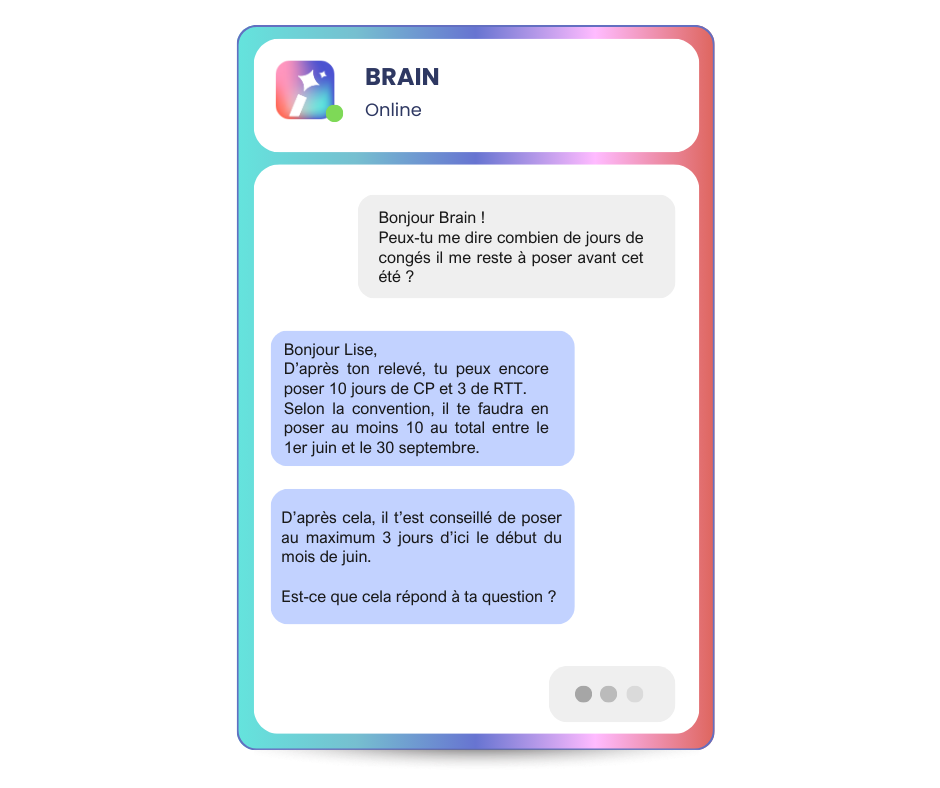
Explore the AI Chatbot
Quickly meet new European requirements with a module designed to analyze pay gaps, manage them, and ensure compliance.
Simplify expense management for employees, managers, and HR: mpleo automates receipt capture, pre-fills key information, and accelerates approvals for a smoother experience at every step.
Artificial Intelligence serving your HR needs
With mpleo, AI is directly embedded into your HR processes to accelerate time-consuming tasks, structure information, and improve data quality.
Secure, responsible, and easy to use, it supports your teams on a daily basis—without adding complexity or replacing human expertise.
Why digitalize your Human Resources with mpleo?
Creation of training reports
2,5
daysTime saved on each training report

Authorization following
1
hoursaved every week
Review coverage
90
%covering after 2 review campaigns
Digital signing of employment contracts
1
daysaved every month
The difference mpleo makes every day
For HR leaders
Fewer manual re-entries, fewer follow-ups, and fewer scattered files. You stay in control of your HR processes and rely on accurate data to drive your actions, structure your priorities, and develop your talent.

For managers
Managers save time on recruitment, onboarding, performance reviews, approvals, and team follow-up. With a dedicated space, they have access to the right information to support their employees and actively engage in HR processes.

For employees
Employees gain autonomy in managing their HR tasks. Through a dedicated portal, they can easily access their requests, documents, personal information, training, and reviews.

For board of directors
HR data becomes clearer and easier to leverage. Leadership can track headcount, skills, recruitment, training, and development priorities with a more comprehensive view of the organization.
Un logiciel SIRH pour structurer durablement votre fonction RH
mpleo vous aide à passer d’une gestion RH dispersée à une organisation plus fluide, plus fiable et mieux pilotée.
FAQ – HRIS software mpleo
mpleo is an AI-native HRIS developed by Septeo HR Solutions. It enables companies to centralize their HR data, automate their processes, and manage the entire employee lifecycle from a modular platform covering recruitment, onboarding, Core HR, performance reviews, training, skills, time and activity management, and HR digitalization.
Septeo HR Solutions is the division of the Septeo Group dedicated to HR solutions. It develops several software solutions designed to support companies in the digitalization of their HR processes, including mpleo, Demat RH, and We Recruit. Its ambition is to provide reliable, connected, and scalable tools that simplify the daily work of HR teams, managers, and employees.
Yes. mpleo is designed to integrate seamlessly with your existing HR ecosystem. The platform can connect with other tools, including payroll solutions, business applications, or software already used by your teams. The goal is to streamline data flows, reduce duplicate data entry, and ensure greater consistency across your HR processes.
The first step is to schedule a demo.
Then, the implementation of mpleo follows several key stages: defining your needs, setting the functional scope, migrating or structuring your data, configuring the modules, training users, and finally supporting the go-live.
Septeo HR Solutions teams support you throughout the entire project to tailor the solution to your organization and ensure successful adoption by HR teams, managers, and employees.
Our clients’ data is stored in France and within the European Union, on secure infrastructures certified to ISO 27001 standards. mpleo is built around a strong commitment to HR data protection, GDPR compliance, and secure access management, ensuring a high level of reliability for your employees’ sensitive information.
During implementation, mpleo teams support you in migrating your existing data. This phase involves identifying the data to be transferred, verifying its quality, structuring it, and importing it into your new HRIS.
The goal is to ensure a secure transition, minimize data loss, and provide your teams with a reliable and actionable HR data foundation.